
16 October 2018
Entrepreneur Laura Delgudice Makes the Most of Her Sports Therapy Skills
Laura Delgudice, a Sports Therapy Graduate from the University of Hertfordshire has a thirst for knowledge, a spirit of adventure and an entrepreneurial business outlook which all add up to a fascinating Sports Therapy career to date.
The BSc(Hons) Sports Therapy Degree course at the University of Hertfordshire enables students to complete a placement year, either in the UK or abroad. Laura was fortunate to spend a year with AFC Bournemouth and with the first team medical department.
Based on her experience there, she decided to complete an epidemiology study of injury incidences and the efficacy of prehabilitation methods for her dissertation.
Such was the success of her time at the current Premier Division club and, based on her performance during her placement, Laura won the University of Hertfordshire Student Placement Award within her student cohort.
Laura then undertook her final year Sports Therapy placement at Ipswich Hospital NHS Orthopaedic and Fracture unit working under the supervision of Orthopaedic Knee Surgeon Mr Christopher Servant. There she gained experience within acute clinics, follow-ups and observed theatre sessions, all of which proved ‘a fantastic learning experience’ for Laura. She said: ‘I would urge any student to gain NHS experience at some point in their career.’
Life after graduating then took her in another direction and to a different continent. Laura said:
‘I decided to spend one year in Australia, during which time I worked at the GWS Giants AFL team in Sydney during pre-season. I worked within the first team Medical department and was fortunate enough to work with some of the most talented Sports Medicine professionals within the AFL industry. I learnt so much from this experience and I am particularly grateful to David Joyce and the Physiotherapy team.’
On returning to the UK Laura began working at Sportsmed East, a multidisciplinary sports medicine company in Suffolk. She said: ‘This opportunity allowed me to utilise all my skills as a Sports Therapist across private clinical practice, pitch-side management of local sporting teams, strength and conditioning for sports scholars at local boarding schools and assisting local care homes with mobility rehabilitation.
‘I was fortunate enough to work with some incredibly talented young athletes and members of staff during my time with Sportsmed East and the opportunity not only enhanced my sports therapy practice but also strengthened my knowledge as a practitioner.’
Laura is clearly a young woman with bags of energy, oceans of self-motivation and a willingness to help others. She said:
‘I decided to complete a volunteer project in Kenya for five weeks as part of African Impacts Medical project. During my time in Kenya I supported local orphanages with health care and teaching English and Sports, assisted local hospitals and the communities. This was an unforgettable experience and pushed me to utilise my skills in very limited environments.’
Laura also understands the values of getting as much experience as possible: ‘I have tried to keep myself versatile as a practitioner by completing Yoga Teacher training, Olympic lifting and Pilates instruction as well as improving my clinical skills by undertaking various short courses such as RPW Shockwave, Tool assisted soft tissue manipulation and CPD’ she said.
It was as a result of Laura’s time at AFC Bournemouth that her entrepreneurial spirit dovetailed with her Sports Therapy skills and together with colleague David Gardner, a Graduate Sports Therapist at AFC Bournemouth, set up an online data analytics platform called Celsporta. Laura said:
‘Essentially it’s an analytical application that caters to both individual Sports Therapists as well as the wider Medical departments, Coaches etc. The application can be utilised for data analysis of both individual athletes/patients and/or sporting teams. Celsporta can be used for injury analysis, athlete monitoring, load management strategies, injury management (notes facility) and team availability.’
Laura sees the platform as being of particular benefit to Members:
‘As Sports Therapists, working in both a clinical and professional sporting environment, and as the developers of the application, both David and I feel this would be of value to Members of The Society of Sports Therapists. We have seen the advantages of having such a platform and we want to make it accessible to our profession’ she said.
‘This business venture has significantly enhanced the quality of my practice and we have been fortunate enough to partner with leading sporting teams as a company to assist them with their analytics’ said Laura.
Therefore, if there are any Members interested in finding out more and wanting details of a special offer for Society of Sports Therapist Members only, they should log in to the Members area.
Continue reading 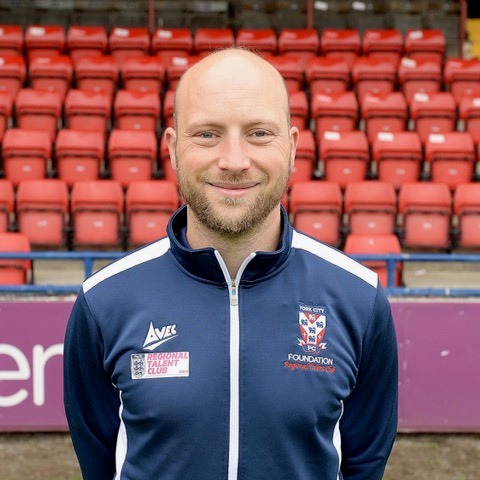
16 October 2018
Society Director Ashley Jones in Conversation with Dale Forsdyke
Society Member Dale Forsdyke is a Senior Lecturer in Sports Injury Management and Subject Director at York St John University. In this latest podcast, conducted by Society Director Ashley Jones, Senior Lecturer in Sports and Exercise Therapy at Leeds Beckett University and supported by Ed Pratt, Chair of the Society’s Communications Group, the focus is on the psychosocial factors associated with injury and performance.
The podcast initially gives an overview of Dale’s journey into Sports Therapy practice and in both Further and Higher Education teaching. Dale discusses his research, delving into the initial psychosocial risks associated with injury and the implications for successful return to play. He also gives some excellent practical advice for Sports Therapists related to integration of psychosocial outcome measures following injury.
Dale has had a number of studies published in the British Journal of Sports Medicine, focusing on the psychology of the sports injury rehabilitation process. He is also in the final stages of his professional doctorate.
Some of Dales published papers can be found under Members Research Articles.
The podcast link is:
https://soundcloud.com/thesstofficial/psychosocial-factors-associated-with-injury-ashley-jones-chats-to-dale-forsdyke
Continue reading 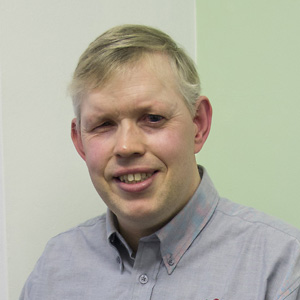
16 October 2018
A Blind Man’s Journey to Being a Sports Therapist
From time to time you have the chance to meet extraordinary people and Society Member Nick Mulryan is one such person.
Nick is the Founder and Lead Therapist at No.1 Pain Relief Clinic in Buxton, Derbyshire and is a Graduate in Applied Sports Therapy from Teesside University. He is also visually impaired and hard of hearing but this has never deterred him from managing life’s challenges as a Sports Therapist.
Nick is Vice Chair of the Society’s Communications Group and during a recent discussion Nick was asked if he would write a blog about his journey so far. He did just that.
Nick writes:
‘For anyone born with multiple sensory impairments (for me, I am visually impaired and hard of hearing), it’s important to find a career that you enjoy, to keep yourself motivated and perform as well as abled peers. I started my career as a professional cocktail pianist as music came naturally – I am able to play by ear. My piano and harmony techniques were later developed further by a professional blind concert pianist and tutor, who not only mentored me, but taught me Braille music. To learn Braille and play the Braille music, I had to develop a good memory and tactile touch; this later served me well throughout my education in becoming a Sports Therapist.
As my sight later deteriorated, I required a guide dog to assist with my mobility, getting me to places without always relying on others. It was at this point in my life I met a voluntary guide dog fundraiser who was in remission from cancer, and raising money and awareness for guide dogs and cancer research charities, through the help of therapists, including a Graduate Sports Therapist.
Hearing her remarkable story and recovery and as well as wanting to help others, I decided to initially learn complimentary therapies and remedial massage for self-interest, helping other disadvantaged and palliative members of the public, including their carers, through voluntary work. This led me to return back to higher education to learn these therapies. As my career went from strength to strength as a Complementary/Massage Therapist, I realised very quickly that I lacked the knowledge to rehabilitate. I then decided to learn Sports Therapy through The Society of Sports Therapists’ Diploma in Sports Therapy course, and gained further experience working in a sport setting with other established and senior members. I soon realised that I also needed to further develop the academic side of Sports Therapy and rehabilitation intervention, so I used my previous hands-on skills and Sports Therapy training experience to eventually graduate with a 2.1 degree in Sports Therapy.
Being a visually impaired and hard of hearing student, there were many challenges ahead to meet university competencies. I had certain software and resources set in place, such as speech and magnification software to help read medical journals and write assignments etc. Training materials such as rehab equipment were always laid out appropriately so that I could orientate myself around the environment independently. I always felt that I was treated like any other student throughout my training to become a Sports Therapist, which further gave me the self-confidence to achieve my dreams.
Since graduating with a degree in Sports Therapy, I have furthered my knowledge in orthopaedics and gained a postgraduate diploma in teaching. This journey took 10 years of dedicated learning and the help of many senior colleagues who mentored me over the years.
Today, I am running my own private health practice, where I get to work with some of Britain’s well known elite athletes, semi-professionals, recreational athletes and sedentary members of the public from all walks of life. I’ve also been on national radio as a health advisor.
It has truly been an emotional and inspiring journey, which has involved plenty of motivation and hard work to get to this point in my career.
If I had to name one pinnacle moment in my career, the most memorable moment I recall is when I was working in visually impaired football. Clubs such as these are set up to give visually impaired children and adults the confidence to go out into their community and socialise with others through sport. Whilst arriving one day at the football training ground, I heard a voice say ‘Is that you Nick?’ I replied positively and the player (who had no sight) proclaimed ‘I’ve done it.’ He told me that had managed to cross the city centre on his own, using a white symbol cane. As he said this, another voice behind us said: ‘Well done.’ It was the player’s sighted mother who had followed him from home to the training ground. For many sighted people this would be nothing extraordinary, but to do this for the very first time, with no sight, must have taken courage, determination and self-confidence. Being a Graduate Sports Therapist has given me this through my own personal career.
For those of you who are wondering if I still play the piano, the answer is yes, but not professionally as my career as a Sports Therapist and running a busy clinic keeps me occupied. However, at this moment in time, I am writing a light crescendo composition for a professional pianist who is recovering well from a fractured wrist.
One of the most satisfying rewards I have in my work is helping people help themselves – aiding their recovery and witnessing someone feel healthier and happier.
I hope you enjoyed reading this blog as much as I have writing it.’
Continue reading 
16 October 2018
Spotlight on: Society Member Kristian Weaver
Kristian Weaver was the first winner of The Society of Sports Therapists Travelling Scholarship to the University of Windsor, Canada back in 2009. We chatted to him about his career to date, which has taken many interesting turns and what the future might hold
How do you feel the University of Windsor Travelling Scholarship benefited you both you as a person and in your career?
The University of Windsor Travelling Scholarship created the foundation to my career as a Sports Therapist. I flew out to Windsor, Ontario unsure of what to expect, having recently completed my degree programme and with the new title of Graduate Sports Therapist! The experience that I gained from working with colleagues and athletes was unforgettable and I was able to put into practice the skills that I had gained over the previous three years. Although I knew the skills, it was not easy – the intensity of working with hundreds of athletes on a daily basis was relentless during the initial training camp, a real insight into the world of an Athletic Therapist. Not only did I develop as a Sports Therapist on a rocket-like trajectory; I also developed as a person learning to be confident, communicate effectively, build new relationships and adapt to different environments.
Tell us about your career to date and what you are currently doing?
I graduated with a First-Class Honours degree in Sports Therapy from the University of Central Lancashire in 2009 and subsequently went on to work with three professional football academies, talent camps with young Great Britain athletes and travelled to Europe and North America for competitions, most notably with the English Ice Hockey Association. As a result of working with so many colleagues and athletes in a variety of sporting environments and settings, I have been exposed to excellent practices which I have stolen (don’t tell anyone), combined and moulded into what I think are outstanding practices. I have created a network of both trusted practitioners and friends along the way who I continue to be in contact with.
I also worked on an initiative run jointly by The Society of Sports Therapists, the Youth Sport Trust and five Sports Colleges. I took up a position of Sports Therapist in a Birmingham school which continued for a period of three years. I worked with a variety of athletes aged 11-18 across ten different sports at both national and international level. This was a great experience in my first full-time role because I was able to work closely with the athletes on a daily basis with access to state-of-the-art facilities and a schedule that I shaped. I learned to be flexible with athletes, understanding the pressures that were placed upon them and adapting practices to suit their sports (some of which I had not been exposed to previously such as artistic gymnastics, slalom canoeing and high-performance dance). The most enjoyable aspect of the role was working with athletes who had lots of enthusiasm for their sport as well as the dedication required to compete on the biggest stages in the world.
More recently I studied for an MSc in Clinical Exercise Physiology at Liverpool John Moores University to add an extra string to my bow. As a result, I gained employment as a Lecturer in Sports Therapy at Edge Hill University in 2014, where I have been since, as well as working in a professional football academy and treating elite sports people privately. The Masters degree increased the depth of my knowledge in the area of human exercise and performance, which I now use to aid in the delivery of anatomy and physiology modules and the wider context of Sports Therapy. Furthermore, it provides the students with a great experience in the laboratory environment, enhancing their understanding of the mechanisms associated with high level performance.
In the last couple of months, I have set up an online Mentorship Programme for Sports Therapy and Performance to help practitioners bridge the gap between qualifying from a degree programme and becoming an established Sports Therapist. It contains aspects that I wished I had had access to or been able to interact with in my early days after qualifying as a Sports Therapist like networking opportunities, journal club, tutorials and informal group chats where practitioners can learn from one another.
What do you think is the biggest challenge for Student Sports Therapists?
I think the biggest challenge for Student Sports Therapists is to gain valuable placements which will further enhance their ability to clinically reason assessment and treatment and apply appropriate techniques. Secondly, upon graduation the toughest task is to consider all of the excellent skills that have been taught throughout the degree and utilise these at interviews and within future employment. However, this is an exciting time when Graduates can learn what suits them as practitioners, based upon the scientific evidence as well as their skills, experience and personality.
What are you ambitions for the future?
I am hoping that I can continue to inspire and educate Student Sports Therapists in my role as a Lecturer and that I can further develop my research profile around two main branches of the female athlete and ultrasound imaging. Currently, I am also spending time expanding the online Mentorship Programme which is attracting more and more interest; therefore I plan to develop this into a great resource for Sports Therapists.
If you would like to know more about Kristian and his current work, he can be found at: www.sportstherapycommunity.co.uk
Social media platforms using the handle ‘@kristianweaver_’
Continue reading 
16 October 2018
York College Graduate Lewis Bulmer Wins Travelling Scholarship to York University, Toronto
York College Graduate Lewis Bulmer has scooped the second Society of Sports Therapists Student Travelling Scholarship to be awarded in 2018 and his sights are now firmly set on York University in Toronto, Canada.
This is the first time the award has gone to a York College student and 26 year old Lewis has double cause for celebration as he has also just been awarded a First Class Honours Degree in Sports Therapy.
Lewis came through a national round of applications from students at Society accredited universities and a tough interview process to come out on top. Hearing his name announced by Professor Graham N. Smith, Chair of The Society of Sports Therapists and one of the panel of interviewers, came as quite a shock to Lewis, He said:
‘I was stunned and absolutely speechless when Professor Smith announced my name. I didn’t expect to get this far. This is an amazing opportunity to work with different sports teams and experience academic life in Canada .’
Lewis will be hosted by Dr Loriann Hynes and her family during his stay. Dr Hynes is Assistant Professor in the School of Kinesiology & Health Science and was recently named winner of the Distinguished Athletic Therapy Educator Award presented by the Canadian Athletic Therapists Association (CATA). Dr Hynes flew to the UK to take part in the interview process.
Professor Smith who chaired the panel of interviewers which also included Keith Waldon, Vice Chair of The Society of Sports Therapists and Maggie McNerney, Director of Charles Whitney PR, was delighted both for Lewis and York College:
‘It was particularly exciting when the final decision was made and the candidate selected was Lewis Bulmer. As the first graduate winner of the Award from the Society accredited York College programme, it is a great reflection not only on the hard work undertaken by all of the staff at the college but also the quality and resourcefulness of the students who undertake their programme. I know that Lewis will really enjoy both his time at York University and working with a really motivated Athletic Therapy team. He will also see how committed York University is to promoting sporting excellence. Lewis will be a great ambassador for York College and The Society pf Sports Therapists.’
Life is anything but quiet for Lewis, who is clearly not afraid of hard work. Along with working as a personal trainer at Pure Gym in York, Lewis undertook a very successful paid internship with York City Knights Rugby League team, working with the players at training and on match days. Lewis hopes to return to the club on his return from Canada,
Lewis narrowly missed crossing paths with the famous Toronto Wolfpack Rugby League side, the world’s first transatlantic major professional sports team, as they were promoted to UK Rugby League’s Championship division last season just as the Knights moved into League One.
While Rugby League is not a major sport in Canada, Lewis’s work at the club will stand him in good stead as he gets to grips with learning about grid iron football, ice hockey and many other sports.
We wish him well.
Continue reading 
5 October 2018
Sports Therapy at Birmingham City University Gets Off To a Flying Start
The academic end of year celebrations have a special meaning for the Sports Therapy staff and students at Birmingham City University (BCU) as it marks the completion of the very first year of the Sports Therapy BSc (Hons) degree programme, accredited by The Society of Sports Therapists.
Chelsea Papworth, a Lecturer on the Sports Therapy degree course, together with some of the BCU students reflect back upon some of the successes of the programme so far and on the fantastic opportunities that were available for the first year students to acquire valuable experience so early into the course:
Kidderminster Harriers Football Club
Pitch side responsibilities
Kidderminster Harriers FC Academy has taken on seven of our students to assist their Academy Sports Therapist with pitch side duties throughout the season. Jack Ciuro was one of the students who applied for the role:
“The Kidderminster Harriers FC pitch side first aid placement has been great. It has helped me to gain excellent experience with injured players, develop my understanding of how to watch the game to spot injuries (and any other issues on pitch) and how to handle a variety of situations that are within the scope of my practice. It has been a pleasure to observe how the Academy Sports Therapist assesses and treats players with a variety of injuries and it has allowed me to gain a basic understanding of rehabilitation in preparation for level 5.”
First Team Pre-Season Screening
On June 25th, eight students were able to assist with the pre-season screening of Kidderminster Harriers 1st team. The Harriers joined BCU for their first day back and were put through their paces in various fitness tests and screening protocols. The team also participated in Nutrition workshops, specifically designed for their pre-season requirements. Emeline Pugeat was one of the Student Sports Therapists supporting the day:
“The day I spent doing the KHFC screening was very interesting. I got to see how the pre-season screening process happens in practice, and it was a very good experience. “
After a successful day, BCU was contacted to arrange for students to support the first team throughout pre-season and hopefully further into their season for 18/19.
Sports Massage Clinic
For the first time, BCU opened its very own Sports Massage Clinic in February 2018 and with 168 clients through the doors in 11 weeks, it is fair to say it was a success. We look forward to opening our doors again in October and then introducing our Musculoskeletal Injury Clinic in February 2019. Samuel Turner reflects on his experience in the clinic:
“Having the opportunity to gain invaluable experience working with real clients has improved both my communications skills and confidence. It has imprinted the process into my brain by allowing me to continue developing my skills immediately after completing my assessment.”
Cadaver Trip
It is never an easy pitch to students that a cadaver workshop can be worthwhile; until you have experienced it, it can seem daunting. However, we were able to take a group of our students to the dissection labs at Keele University in May; it was a fantastic morning. Jassimran Kaur shared her thoughts:
“My experience at the cadaver trip was really interesting; it reinforced what I had learnt about the human body, as well as being able to see structures outside of the musculoskeletal system, such as the heart and lungs.”
London Marathon
April 22nd saw a very hot London Marathon. Students were taken to London to join forces with Children with Cancer to provide post event sports massage to the worthy runners. Hardev Matharu was one of the students who took part:
“Going to the London Marathon with my fellow classmates and lecturers was one of the best experiences of my sports therapy career to date. I got a chance to meet a variety of different runners which really tested my skills when providing post event massage. Just being in an environment like that was a learning curve, as it was more demanding and faster paced to what I had experienced, when compared to our clinic environment which we run at university.”
Warwickshire County Cricket Club (WCCC)
Students were lucky enough to be offered the opportunity to provide sports massage support for the WCCC 1st team. Students applied for this opportunity and were invited for interview. Thomas Maundrell was one of the successful students who has been undertaking the experience at the club, here are his thoughts:
“The placement at Warwickshire is an excellent opportunity to work with professional players in a high tech environment. This has given me hands on experience of how players are dealt with in a professional setting. Furthermore, it highlights the positive effect that sports massage also has on players.”
Worcester Warriors Internship
Various opportunities became available to our students at Worcester Warriors for a Strength and Conditioning Internship and pitch side academy cover for a summer camp the club were running. Two of our students were successful in the application process, Paige Wilkes shares her thoughts:
“I recently started an internship with Worcester Warriors Rugby Football Club as a strength and conditioning coach for the academy team. I’m looking forward to taking part in the under 16 and under 18 testing days coming up, along with the 3 day training camp we will be attending in Malvern next month.”
Great Britain Basketball and Course Experience
Gregory Downes was able to gain some invaluable work experience at a GB Senior Men’s Basketball camp in Leicester last year. Here are Greg’s thoughts on the experience and his time on the course so far:
“I have thoroughly enjoyed beginning to learn a new profession this past year. The content taught has been fantastic and very challenging. All of the sports therapy staff are extremely knowledgeable, approachable and happy to assist in academic struggles. I was lucky enough to experience a great opportunity with Team GB Basketball at their first World Cup qualification camp. It was an amazing experience and I feel honoured to have massaged and assisted some of the best basketballers Britain has to offer.
I’m very impressed with the opportunity given to students at such an early stage of this degree where we are able to put the content we learnt into practice, which is certainly helping me to develop into the sports therapist I want to be.”
Peter Thain, Course Leader, shared his thoughts:
“This has been an exciting year for Sports Therapy at BCU. Our teaching philosophy demands a practice-led, knowledge-applied approach and I am very thankful to our team of staff for providing such an array of opportunities for our first year students. We are very proud of the students who have made the most of the opportunities that have been available to them, as they have represented themselves, BCU and The Society of Sports Therapists incredibly well.
This first academic year has seen us transition into our brand new home at the City South Campus, Edgbaston. With equipment such as anti-gravity treadmills, DEXA, environmental chambers, and teaching- only fitness suits and sports halls, alongside our bespoke clinical space, with repeater screens, the new home of Sports Therapy will allow us to deliver our programme philosophy, and best prepare our graduates for industry.”
Editor’s note
Congratulations to the Sports Therapy staff and students at Birmingham City University for a great start to the programme – we wish you all continued success for many more years to come.
Continue reading 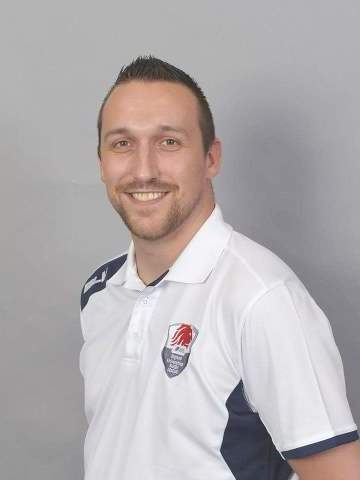
5 October 2018
Society Member Matt Duke Leads the Way for Sports Therapists Working in Rugby League
Society of Sports Therapists member Matt Duke discovered his passion for Rugby as a Sports and Exercise Therapy student at Leeds Beckett University. Since then he has worked extensively as a Sports Therapist in Rugby League, travelling the world with the sport.
Currently a lecturer at Leeds Beckett University, Matt is fulfilling a long-term ambition to teach, as well as keeping one foot firmly in Sports Therapy practice with his role as Head Therapists for Bradford Bulls Rugby League. Matt sees the development of the next generation of Rugby League Sports Therapists as an important part of his role at Bradford Bulls and, with the club, has developed placements and internships designed to provide a more rounded and hands-on experience of life as a Sports Therapist.
We caught up with him to learn more about his inspirational journey.
When you signed up for your undergraduate course at Leeds Metropolitan University (now known as Leeds Beckett) did you see yourself working in Rugby League or as a Lecturer? What were your ambitions?
When I first enrolled on to the course my ambitions at the time were to work for a sporting team and at some point teach. I remember during one of the first lectures my lecturer went around the room and asked everyone where they saw themselves in five years. Everyone answered ‘work in sport’ or ‘have their own clinic’. I was the only one who said to teach. But through placements it soon became clear that I loved working in Rugby, both Union and League. The diversity you see within rugby sets you up for pretty much any situation. With the contact element, cardio vascular element along with the pace and technique involved within the sport, it opens up players to a broad spectrum of injuries from broken legs and orbital floor fractures to sprained thumbs and ankles. The vast spectrum of injuries you come across makes every day a unique experience.
You have worked with a number of different Rugby League teams from the university side through to the England team. Tell us how it came about first with the university side? Why the Rugby League team? Do you play or have a passion for the sport?
I have been involved with Leeds Beckett, Great Britain Academics, GB pioneers, England Student’s, Leeds Rhinos, Queensland Cowboys and now Bradford Bulls Rugby League teams. I first got involved with Rugby League through a colleague of mine from Rugby Union. They needed help with the university and I happily obliged. Since that moment, doors opened up for me within the student game starting with the tour to South Africa with Great Britain Academics. As part of my Masters, I went on placement at Leeds Rhinos and stayed there for 6 years. It is from this placement that I became involved with the full England Senior side cumulating in the 2015 tri series win over New Zealand. Also I was asked to work with the Queensland Cowboys in 2015 when they came over from Australia for the World Club Challenge against Leeds Rhinos. I followed rugby as a child but never really got involved in playing it. But since being involved in rugby, my passion for anything related to rugby has increased massively.
How did the role with England University students come about? Tell us about your tour to Australia.
I had been involved with student Rugby League for 6 years and I was given a heads up that one of the physiotherapists who was due to go, couldn’t. The position went out to interview and I applied. I had to go through several interviews but was eventually offered the position. The tour was to Australia for the Student World Cup. For two and a half weeks, a Physiotherapist and I supported the team in their quest for world cup glory. Games were every other day so recovery was paramount as well as making sure player safety was taken in to account. My role was to organise the ordering and logistics of the medical equipment, treat the players, and run the pitch as Head Trainer, assessing injuries on field and deciding whether they need to be removed from play.
You have also toured internationally with other sides. Can you tell us about them?
I have had 4 trips abroad with Rugby League to South Africa, Bosnia, Hungary and Australia. They were with Great Britain Academicals, Great Britain Pioneers (2 tours) and England Students respectively. Each tour involved treating players, managing recovery and the logistics of medical equipment. The tours were amazing to be part of and each place is a fantastic place to visit! The tour to South Africa was a tri series. The Bosnia and Hungary tours were designed to develop Rugby League in different countries, spreading the game across the world and the Australia trip was for the Student World Cup.
Your lecturing role started in 2014 – what made you move into lecturing?
I had always planned to get into lecturing. I found during my studies that I enjoyed the presentations and public speaking. I am also realistic enough to know that I am not going to run onto a rugby pitch for the next 50 years so I saw lecturing as a finishing point in my career. However, when I finished my Master’s Degree, I was offered a part time role within the university therefore getting into lecturing way before I planned – but I haven’t looked back since. Initially it was to supervise the students in the university injury and massage clinics we run. Now, I am still involved with the injury clinic, but have more contact time teaching the students. Human Anatomy, Sports Trauma and the business modules are the main modules I have been involved with. Lecturing is such a rewarding career path. I see in the students where I used to be and draw upon my own experiences to try and make them as good as, if no surpass myself.
You are now Head Therapist at Bradford Bulls – how do you split your time between rugby and lecturing?
Bradford Bulls and Leeds Beckett have both been incredibly supportive allowing me to fulfil both roles. Bradford encourages development and Leeds Beckett is proud to have one of (if not the first) graduate sports therapist to be head of a medical department in professional Rugby League as a lecturer at their university. Don’t get me wrong, it is hard work and long hours but I couldn’t see myself doing anything else. I am happy to be working 6 and a half days a week because I am doing a job that I love. Teaching in a morning, rugby training on an afternoon with games on a weekend, who could ask for more!
Bradford Bulls have gone from being a super league team to being liquidated in 2017. Staff and coaches were made redundant. It must have been a torrid time for the club. Tell us how your role at the club came about. Did you start after or before that happened?
I joined Bradford Bulls this current season after administration and relegation from the Championship last year. I caught wind of the job opportunity via connections I have made during my career and went in for an interview. Having sat down with the hierarchy at the club it was clear to me that the club was in a strong position and united in the goal to get such a great club back to where it belongs. So I took on the job of developing the medical department. I work alongside Aaron Scholes, another Leeds Beckett Alumni in Sport and Exercise Therapy, and the medical department is thriving with over 100+ players in our care, and new equipment and processes in place to identify, maintain and prevent injuries occurring before they happen.
I am in 5 to 7 days a week depending on fixture dates. My role involves the day to day management of the players, from recovery to monitoring the players’ welfare. Games are usually on a Sunday but to work in sport, weekend work is a given.
As Head Therapist do you have responsibility for all the teams?
My main duties are to the First Team and to oversee the Academy which includes U19’s, U16’s, U15’s and elite scholars. The majority of my time is spent with the first team but I have several days a week contact with the Academy. My colleague Aaron Scholes, another Leeds Beckett Alumni in Sports and Exercise therapy, heads up the Academy medical department.
Does Bradford Bulls provide a venue for students to gain clinical experience?
Yes, it is one thing that I wanted to make a priority when taking the role. Having been through the placement process myself, I know that doing only soft tissue work provides minimal development to therapists. It’s why at Bradford Bulls we try to give students on placement a wide variety of tasks to do to create a more rounded therapist. We recently advertised internships to work alongside myself and Aaron with the first team and Academy. We like to give students tasks such assessing injured players, devising rehab programmes for the injuries, lead prehab exercise classes and provide pitch side first aid to the players all under the medical team’s supervision. By giving students a rounded and varied experience within a professional environment, it creates a fun and professional working environment which is more effective at developing the next generation of therapists. It also creates the drive to want to pursue a career in Rugby League. I believe that this is the best way, rather than some clinical placements taking on students for ‘free labour’.
We don’t know of many Sports Therapists working in Rugby League – is that the case? If yes what needs to happen to encourage more to go into the game?
Yes, Sports Therapists are amongst the minority within Rugby League. It is traditionally a Physiotherapy dominant sport. The only Sports Therapists I knew working in professional Rugby League were providing massage at training and game days. However, in December 2017 the RFL changed its medical rules which allow Sports Therapists and Sport Rehabilitators to undertake the IMMOF qualification, which allows them to take to the field in the professional game. However, the Super League and top four of the championship are still ringfenced for Physiotherapy. Since the rule change, Sports Therapy and Sports Rehabilitation now have the opportunity to work in the professional game as clinicians rather than Soft Tissue Therapists, further pushing Sports Therapy forwards and hopefully creating more Heads of Departments like myself.
What advice would you give to Sports Therapists wanting to get into Rugby League?
My advice would be network, showcase your personality, and do your time. Volunteering your time gets noticed and opens door. Once you have a foot in the door, many more open. No matter how annoying or frustrating it can be, do your time, earn your reputation and you will get to where you want to be.
Continue reading 
18 May 2018
London Met’s Sports Therapy Student Lionel Stone Claims Top Business Prize
[vc_row][vc_column width=”5/12″][vc_single_image source=”featured_image” img_size=”large”][/vc_column][vc_column width=”7/12″][vc_column_text]Every year London Metropolitan University Sports Therapy department holds a business competition for 3rd year students as part of their ‘Business Developments in Sport’ module. The aim is to give students an insight into what working life could be like after graduating. Third year student Lionel Stone was this year’s winner and such has been the impact of the event on him, Lionel is now planning to open his own business.
Society student member Lionel explained how the module helped him develop his business idea:[/vc_column_text][/vc_column][vc_column][vc_column_text]‘The business module was put together to help sports students start their own business. As a sports therapy student I was aware that this would be a major career opportunity for me. Our lecturers, Nick Gardiner and Raffaella Pontonutti shared some of their own personal business experiences after graduating from London Met which made me believe I could do something similar.
The module has taught us all we need to know to get started, from marketing strategies to business related pitches. We were also exposed to one of the leading public speaking coaches in the UK. This guest speaker taught us invaluable lessons regarding public speaking which would help us in the business world. This was closely linked to the competition that was run throughout the module where we were split into small teams to battle amongst each other in a league format. Scores gained from weekly tasks (such as logo design and elevator pitches) accumulated to the final week where the team with the highest score won a place in the final.
The final involved the winning team of the league going against each other to win an iPad and a website to help kick start a business. The task that determined the ultimate winner was to create a presentation on ‘How an iPad would help our business’. We were encouraged to use the knowledge we had gained from the module to deliver an engaging presentation. I gained a few tips from Nick, Raffaella and the guest speaker about public speaking and presentation regarding audience engagement and an interactive presenting style. This has helped me put together the best presentation I could produce. I am very pleased that I was rewarded for my hard work and am looking forward to putting my plan into practice’.
Society Member and Lecturer in Sports Therapy at London Met University, Aldo Lena said:
‘We would like to congratulate our 3rd year sports therapy students for their great work, and wish Lionel and the winning team: The Visionaries, good luck with their business plans.’
*Picture 1: The winner, Lionel Stone and lecturer Raffaella Pontonutti
*Picture 2: Winning team – The Visionaries with the two lecturers.
(left to right) Nick Gardiner (lecturer), Joshua Amobi, Lionel Stone, Francesco Recchia, Hayden Harris, Carolyn Logan, Raffaella Pontonutti (lecturer).[/vc_column_text][/vc_column][/vc_row]
Continue reading 
3 May 2018
UEL’S BEAT Strikes a Chord for Equality and Gender Issues
[vc_row][vc_column width=”7/12″][vc_column_text]University of East London (UEL) Student Sports Therapists Paloma Pinto, Tereza Mateju, Amelia Price and Powell Omozogie, together with their BSc Sports Therapy Programme Leader Michael Cole, set up in 2017, the Body Equality in Athletic Therapies (BEAT) group.[/vc_column_text][/vc_column][vc_column width=”5/12″][vc_single_image image=”1441″ img_size=”large”][/vc_column][vc_column][vc_column_text]
The initial aim of the group was to raise awareness of attitudes, behaviours and practices, seeking to facilitate more ‘equitable therapeutic practice in their teaching, learning and assessment’, creating an arena for open discussion and positive input. Since then, the group has gone from strength to strength.
BEAT discusses issues regarding gender representation within sport, healthcare, higher education and the fitness industries. Particular topics that emerged include body confidence, body dysmorphia and general inequalities specific to these areas. These issues are discussed and addressed with intersectionality (the interconnected or overlapping nature of different social groups) in mind, with a focus on race, sexuality and other identities.
The group holds collaborative meetings involving both students and lecturers and gathers input from other Sports Therapy students through questionnaires. BEAT’s findings were presented to lecturers at the end of the 2016/2017 academic year and the feedback from the group’s first sessions has already been embedded into the curriculum.
While BEAT’s work seeks to address and improve inequalities present within their course, its overall impact is much wider. The group is improving the ‘cultural competency’ (the skills needed to communicate and work effectively with other cultures) of the lecturers, which will feed into the Student Sports Therapists’ learning. Students will develop professionally by engaging with different experiences and points of view, which means they will be better equipped for the workplace.
We talked to Paloma, Tereza, Amelia and Powell to find out more about BEAT and their experiences with BEAT to date.
Here’s what they had to say:
Can you give us a little background to BEAT? How did it come about?
Paloma: I remember the day BEAT began was when a guest lecturer came to cover movement of the scapula, about six months into first year. We were asked to pair up and remove our tops to observe the different movements. The group divided in female and male on opposite sides of the room. Whilst the men were straight into practice, the women took 15 minutes deciding who was going to remove their tops and only two out of 15 finally did it, feeling awkward.
I decided to stay and speak with the course leader after the class, after which a series of back and forth emails and meetings gave shape to the group’s format and objectives.
Who or what was the inspiration behind it?
Paloma: I believe it was just the feeling of frustration. Despite all of us being students of a healthcare degree, we were looking at the male and female bodies with different eyes. Instead of learning from our differences, we were avoiding the opposite sex and, in some cases, missing out on learning opportunities altogether.
[/vc_column_text][vc_column_text]
Tell us a bit about the concept of intersectionality
Paloma: UEL has over 60% Black and Minority Ethnic (BME) students. Therefore, in order to tackle disparities, it was necessary to integrate layers of discrimination based on race, class and religion.
For example, BEAT aims to develop specific guidelines on peer work that provide a safe and supporting space to Muslim women in practical. Regarding race, we touched on decolonising the curriculum and incorporating inclusive and identifiable images on PowerPoints. We even had Fidel Kondwani, a poet and social activist, attend a group session.
How many people overall, students and staff, are involved in this initiative?
Tereza: Four students and the Programme Leader of the Sports Therapy course run and manage the group. It targets first and second year students.
In your opinion, what do you think are the main issues in Higher Education in the sport and healthcare arena?
Powell: A few issues came to our attention around the healthcare and sport subjects.
One of the main issues seems to be a non-equal relationship between males and females. The way in which gender is perceived within the Higher Education system is yet to be improved. Throughout our academic journey we came across a few inappropriate behaviours, in particular towards female students. We identified and discussed, for instance, how a female subject would be spotted instantly, by simply removing a top or a pair of trousers to get changed for physical activities, when also surrounded by male colleagues. Our workshops suggest that this is one of the main sources of insecurity, and could lead to a future lack of participation by the victim.
Another issue appears to be linked with mental wellbeing, often caused by anxiety. Most of the time, students who suffer from anxiety do not communicate it with other people so it gets suppressed internally by the individual, and if held onto for too long, there is a chance it can develop into depression.
What inequalities have you found to be most prevalent in the sport, healthcare and fitness industries?
Paloma: The lack of equal representation in management roles both for gender and race in all the industries. Furthermore, the fitness industry still focuses primarily on the look of the individual, rather than the skills. Even though more females are encouraged to pursue an athletic look, the goal is mainly cosmetic gains rather than health and mental benefits. Men are pushed to pursue a big body, which can lead to overconsumption of protein and steroids. Similarly, as in the fitness industry, the sport industry is still lacking female recognition, although this is changing. In the healthcare industry, diversity tend to still be an overlooked issue, which needs to be managed more seriously.
How are you and UEL working to tackle such issues?
Paloma: BEAT offers a space to discuss current issues that, due to the strict lecture schedule, could not be otherwise challenged. Sharing stories provides group solutions that are then translated to the practical rooms and taken to placement experiences. Hopefully we are becoming more aware of different barriers and we can be more supportive with our patients.
How do you feel gender is being represented in the Sports Therapy profession and in sports healthcare in general?
Amelia: Even though gender equality has come a long way, I feel that there are still unaddressed issues with gender and the Sports Therapy profession. Professional sport, in my opinion, seems like a very male dominated world with male managers, coaches, referees etc. At least that’s how the media portrays it. I think that could be a bit daunting for a woman because you could be nervous that they won’t take you seriously despite your talents and knowledge. During class, I have noticed that males and females tend to divide due to awkwardness, but I feel that the BEAT group has helped to tackle this issue and, as I said, gender equality has come a long way, with both men and women being recognised for their talents in Sports Therapy.
How have your tutors supported you throughout this journey?
Tereza: Our course leader Michael Cole has been very supportive throughout the entire time. He helped us find relative research and discussion topics and championed our group in front of the heads of school at UEL, connecting us with really relevant people such as The Athena Swan Charter who are an Equality Challenge Unit. Thanks to this, we are now involved in all of these different conferences and debates. He recently helped us organised a debate with a famous poet writer Kondwani Fidel from the US. This debate had a higher attendance of participants than similar previous events.
How do you feel you and your colleagues have developed as individuals and as Student Sports Therapists as a result of taking part in BEAT?
Tereza: Taking part in this group, we developed our teamwork skills, as well as how to work well individually. During our debates we listen to everyone’s opinions and express our own too. Our communication, time management, research methods and presentation skills improved which are also necessary when working as a Sports Therapist. Good communication skills help the clinician to understand patients and their needs.
You recently spoke at the UEL Student Union Equality and Diversity Student Conference – how did that go?
Amelia: We had the issue of a very small window of time to speak, but when we were talking, I felt that everyone in the audience was engaged and listening to us and had genuine interest in what we were saying. I feel it was a real success.
Congratulations also on being asked to speak at ‘Women in Sport and Exercise Conference’ (‘Blood, sweat and fears’) at Staffordshire University in June by the Women in Sport and Exercise Academic Network (WISEAN). Word is clearly spreading about the great work you, your fellow students and lecturers have started.
Amelia: It is a great opportunity for the group to grow and let people know about us. We have never taken part in a conference of this scale before, so we are all very excited. Hopefully we can inspire other students at different universities to get involved in this discussion and take part. The only issue is the price of the ticket. We have been looking for some financial support that will cover the ticket as well as the travel expenses.
What would you ultimately like to achieve with this project?
Tereza: With this project we would like to address topics such as undressing for clinical massage during practice, body image and confidence as well as equality among male and female groups in the clinical environment.
At the end of term we will write a role specification for BEAT and advertise for first year students to pick up the baton and lead it into another year. We want to encourage people to be able to think and talk about these issues.
Professor Graham Smith, Chairman of The Society of Sports Therapists on hearing about BEAT said:
‘In an age when society is being encouraged to exercise, many of those who would benefit from it the most are either discouraged or concerned about how they will be perceived because of their personal perceptions of their own body image. This innovative and insightful group of Sports Therapy students at UEL, led with enthusiasm and commitment by Michael Cole, have truly captured many of these issues. More importantly, not only have they been able to identify these issues, they have endeavoured to address them and heighten awareness in those who should be concerned. All this has been alongside their studies for an extremely intense Sports Therapy degree.
As Chairman of The Society of Sports Therapists, I’m extremely proud of what they have done and are also hoping to do. As a professional with a long experience of working in Sport and Exercise, I recognise and acknowledge the issues they are highlighting; issues that must be brought to a wider population and faced head on.
[/vc_column_text][/vc_column][/vc_row]
Continue reading 
27 April 2018
Children with Cancer Charity Inspires Birmingham City University Students at 2018 London Marathon
[vc_row][vc_column width=”6/12″][vc_column_text]The 2018 London Marathon proved to be the hottest marathon on record for the capital city and Sports Therapists from Birmingham City University (BCU) were out in force to support many very tired runners at the end of the race. BCU had teamed up with the renowned charity Children with Cancer UK; who had 1400 runners enduring the heat and 26.2miles, to raise money for a hugely worthy cause.
BCU Sports Therapy Lecturer Chelsea Papworth has been working with Children with Cancer UK at various events over the past 4 years and she told us how she had been keen to get BCU’s first cohort supporting this year’s race:
‘Children with Cancer UK (CwC) are fantastic. Not only are the staff incredibly welcoming, there is an indescribable atmosphere created for every runner who comes through the doors. They all have reasons for their fundraising and are very inspiring individuals whom we are more than happy to help. I cannot thank CwC enough for providing us with the opportunity to continue to support them at these events; the experience is invaluable for our students.’
Chelsea and Tim Leary, Senior Lecturer in Sports Therapy at BCU had the foresight to have a ‘before and after chat’ with two of the BCU students Rachel Hutchison and Ryan Foster; gaining valuable feedback which we are sure will be both useful and reassuring for students embarking on their first public event in the future.
Rachel was excited about the chance to demonstrate what she had learnt throughout her first year of the course, whilst being in a new environment and said: ‘ I am a little apprehensive as you never know who is going to walk through the door or how they may be after finishing the marathon. I know that it is important to apply what I have learnt so far to help relax the runners.’
Ryan Foster was most looking forward to ‘meeting and helping the amazing people who have raised money for the charity. I am also looking forward to experiencing being a sports therapist first hand in a professional environment.’
After arriving at the QEII centre in London, the students were put through their paces as part of a multidisciplinary team. They were treating runners for about 6 hours in total and according to Chelsea Papworth, they did a fantastic job.
So how did the event work out for the two students?
‘It was an amazing experience, one that I would happily do again, as the appreciation from the runners and the charity was exceptional. Even after hours of massage, everyone carried on, as the reason for doing it was beneficial and gave me the encouragement to help as many people after their run. My favourite part of the day was when the first runner came through the door and the atmosphere in the room was lifted. It was important for the runners to know how many people were behind them and supporting them when they were completing the marathon.’ said Rachel
For Ryan it had also proved equally rewarding:
‘Overall the experience was amazing! I have benefitted from learning what a fast paced massage scenario is like and also how much I would like to work in a similar environment. My favourite part of the day was talking to the athletes and listening to their stories.’ Ryan Foster.
Peter Thain who is Programme Leader and Senior Lecturer of Sports Therapy at BCU, and back from working at the 2018 Commonwealth Games with Team England Basketball said:
‘This was another fantastic opportunity for our students to gain real life experience in delivering sports therapy. Whilst the students have been running a Sports Massage Clinic at BCU, there is nothing like providing sports therapy support to runners post marathon! It is also important that students recognise the need to embrace every opportunity, even if not in Birmingham, and therefore I am grateful to Chelsea and CwC for organising and providing this opportunity for us, thank you!
BCU would like to thank Children with Cancer UK, for allowing our students to get involved and we are looking forward to London Marathon 2019 already.
Editor’s Note
Our thanks to Chelsea and BCU for giving us a great insight into their day from a student perspective and well done to all BCU sports therapy students and staff who took part.
If you, your university, your clinic, your team took part in the 2018 London Marathon either supporting a charity or runners in general, or if you actually took part in the race, do get in touch and tell us about your day – it would be great to hear from you.
Continue reading