
13 January 2022
Guide Dog Willmott Takes on New Role with Society Member Nick Mulryan
Nick Mulryan was born with multiple sensory impairments (sight and hearing) and as a result, the Guide Dogs community has played a key role in his life, and even led to him discovering his calling to become a Sports Therapist*. Nick founded No.1 Pain Relief Clinic in Buxton in 2011 and he is the Lead Therapist at the practice.
Nick is also a Member of the Society’s Communications Group and has previously given insights on how to make the Society’s communications more accessible to all Members.
Recently we chatted to him about how he navigates the world with the help of his Guide Dog, Willmott:
Tell us a little about your disability and the importance of having a guide dog for you personally
Willmott provides greater independence with my mobility, safely negotiating me around potential hazards such as pedestrianised obstacles and traffic – particularly electric vehicles that can be difficult to hear. Willmott also enables me to get up and go, swiftly assisting me to locate shops, navigating medical seminar venues as well as working in the field of sport behind the scenes, by locating the treatment room and walking to and from work. He has a very good memory for returning to previous locations.
Your last guide dog Comfort passed away suddenly. How were you supported afterwards?
I was supported by ‘Guide Dogs’ through this ordeal, with counselling if I felt I needed it. Although COVID-19 was a devastating period for many people due to work and lockdown restrictions, on reflection, I felt I had more quality time with Comfort – we had some fabulous walks in and around the Peak District. It reminded me how precious life is and what we can do as therapists to improve the quality of life for others. Comfort kept wanting to help and please me, even at the end when her health prevented her from performing properly.
Tell us about Willmott
Willmott is a two years old cross between a Golden Retriever and German Shepherd – ‘Guide Dogs’ like to interbreed complimenting qualities: a Retriever is calm and a Shepherd is driven and hardworking. He loves playing catch with a frisbee (a somewhat haphazard activity with a visually impaired person!)
What does the training with a guide dog involve? How long does it usually take for it to be able to fully support you?
It takes about two years to train a guide dog – from puppy onwards. Each dog is chosen for its suitability, it has to have the right temperament. There is a great deal of both basic and advanced training (dealing with obstacles and kerbs etc), the final part is tailored to the client’s needs. For example, Willmott and I have had training on the London underground as a specific task.
What are a Willmott’s main duties?
He helps me find places I visit regularly and locate entrances and exits to shops, pedestrian crossings and of course his free run area. He helps me avoid obstacles enroute and centrally walk across crossings and along the pavements, stopping at kerbs and steps.
He will also be aware of obstacles above or to the side, such as overhanging branches, vehicle tailgates, he’s even trained to give my right shoulder extra space to pass obstacles (I hold him with my left hand).
What does Willmott help you with on a day when you’re not at work?
Willmott provides me with greater independence and companionship when we’re both ‘off duty’. I don’t have to always rely on other people to go places. Willmott enables me to get up and exercise every day. He enjoys going for a regular free-run where he is allowed to chase a frisbee and enjoy some unleashed fun. He’s also great at barking when the doorbell rings.
What’s the biggest challenge of having a guide dog?
People distracting the guide dog by petting or fussing without your consent, it’s especially troublesome when crossing the road or working in a shop (particularly when trying to maintain social distancing). Although sighted motorists think it’s a nice gesture to let you cross the road, stopping their vehicle only confuses the dog as it is waiting for a clear gap in the road.
Is Willmott allowed to interact with other people around you and vice-versa?
Willmott is permitted to socialise and interact with other people providing he’s out of harness. If a guide dog is wearing a harness, the dog is working and therefore shouldn’t be distracted.
Did the pandemic restrictions impact your guide dogs’ behaviour in any way?
The pandemic limited the amount of time spent training in public places such as shops and public transport.
It also limited the time Willmott could be brought up to train with me. Luckily, he is well cared for by various volunteers and instructors who continued with his advanced outdoor training.
When treating a patient, is there anything Members can do to help guide dogs and their owners?
When guiding a visually impaired person, stand on the opposite side to the guide dog, it often helps if you let them hold your elbow.
Ask the owner for permission to pet the dog but really, it is best to ignore the dog entirely.
Refer to the patient by name, and describe the process as clearly as possible (be aware they possibly can’t read body language), explaining where the head end of the table is for example. If describing an exercise, no matter how trivial, inform them where you are placing your hands to avoid any embarrassment.
Be aware of the tone of your voice too – try and sound interesting, not monotone and boring.
Is there anything else you’d like people to know about guide dogs and their owners?
Guide dogs are working animals, it doesn’t help to offer them treats or special attention as this will distract them from their task and cause extra work for the visually impaired person.
*Find out how a voluntary blind dog fundraiser, in remission from cancer, steered Nick towards Sports Therapy – https://thesst.org/news/a-blind-mans-journey-to-being-a-sports-therapist/
Editor’s note:
If you are a Member working in Sports Therapy with a disability, whatever it may be, and would like to share your journey, do get in touch, we would love to hear from you. Email comms@thesst.org
Continue reading 
15 December 2021
Equity, Diversity and Inclusion – Your Opportunity to Make A Difference
What is this new group that we’re introducing?
The Society of Sports Therapists (SST) has completed the latest phase of developing its strategic approach to equity, diversity and inclusion. The ‘Network for Engagement in Equity, Diversity, and Social-Structural Strategy’, or NEEDSs, represents the framework and foundation for the next phase. Work is now underway to form the SST NEEDSs group to help shape the objectives and subsequent engagement activities.
The group will be instrumental in developing the final strategy and objectives, and will have a key role in supporting the pursuit of SST NEEDSs policy and practices from 2022 onwards.
The SST NEEDSs group will be a brand new group for 2022 that will comprise of Society Members and Student Members and will include representation from the Board of Directors.
Why should you apply to be a member of the NEEDSs group?
There are numerous benefits for members who join the group. These include opportunities to:
network and develop professional connections
add group experiences, activities and achievements to your CV
help develop the professional body on behalf of members
engage in social justice activism in solidarity with others
have potential for future member benefits
use as part of your CPD SST commitment
What does being in the NEEDSs group involve?
Group members will share roles and responsibilities in a supportive, teamwork based approach, with rotating team leaders. Members will meet:
as required, for example, once per month for 2hrs online
as required, for example, once every 3 months in person (travel/ food/ accommodation expenses provided)
In meetings, members will consider and discuss various aspects of SST policy and practices with the aim of supporting the Society towards improved Equity, Diversity, and Social-Structural relations. Full terms and responsibilities to be agreed as an outcome of the group’s first meeting.
How to apply?
If you want to join the SST NEEDSs group, please email admin@thesst.org attaching a brief explanation of why you want to join and why you are suitable. Members may send either one of the following:
150 word written explanation – send via email to Head Office at address above or
1 minute video recording – send via https://www.wetransfer.com – it’s free to send
1 minute audio recording – send via email to Head Office as above or via https://www.wetransfer.com
When is the deadline to apply?
Please ensure your application is received no later than Sunday January 9th 2022.
Who are we looking for?
The SST is looking for members who have the following criteria:
Essential:
a current SST Member or Student Member
passionate about contributing to a more diverse and equitable profession
prepared to challenge, with support, and recommend new ways of working that foster positive Equity, Diversity, and Social-Structural relations.
Desirable:
may have lived experience of marginalisation or oppression based on their characteristics
have expertise in Equity, Diversity, and Social-Structural relations within the workplace, particularly in Sports Therapy, fitness, medical or health professions and beyond
have relevant experience in identifying best practices and implementing innovative approaches in Equity, Diversity, and Social-Structural relations
have an active interest in issues surrounding inequalities in MSK health
Mission
The SST NEEDSs Group will provide strategic advice, recommendations, and counsel to the SST Board of Directors, CEO, President and staff regarding areas or issues concerning diversity, equity, and inclusion.
Continue reading 
9 December 2021
Therapy Expo 21- A Showcase for Society Members’ Knowledge and Expertise
Therapy Expo 2021 was a new experience for the Society Members invited to speak on the academic programme and they rose to the challenge in style.
Nine Society Members featured across the two days of the event with Society President Professor Graham N. Smith chaired a marathon day long session on day one.
Dr David Rhodes, Course Leader and Senior Lecturer in Elite Performance at UCLan gave Therapy Expo a fantastic start as he kicked off the talks in Theatre A looking at ‘Reducing the Risk of ACL Injuries– What you need to know.’ With the sobering thought that a third of footballers do not return to the same level of performance following an ACL injury, the focus was not on the outcome but factors influencing it. David highlighted some major factors including the role of fatigue and load and the effects of overtraining, undertraining and deceleration. He emphasised the importance of understanding the athlete’s/patient’s sport, being specific to their needs and demands and most of all, getting their buy-in. All attending agreed that it was a superb start to the day.
David was immediately followed by Mike Hine, Head of Sports Science and Medicine at Lincoln City Football Club. Mike focused on mitigating risk from an injury stance in his presentation, ‘Prevention, Preparation and Performance in Professional Football. Mike has been with the club for over six years and showed not only his knowledge and skills but his great understanding of players and showed some brilliant video footage, capturing the players working out. Having player buy-in along with the need for them to be involved in the programme is essential. Mike has definitely mastered the art of getting the best out of players on a League One budget.
It was then a quick hop over to Theatre B to listen to Adam Gaunt, Rehabilitation Specialist, at Hartpury University and College. What a treat it was. Adam’s mantra, ‘Movement is Medicine’ has a major role to play in his rehabilitation programmes. His talk contained an array of engaging videos and images with his activities continually backed up with strong and relevant references. Adam is definitely at home working with young athletes, clearly demonstrating how his group rehabilitation programmes integrate ‘movement competency, physical durability and psychological readiness into a safe fun space.’
Five hundred and fifty seven (557!) that’s the approximate number of teams currently affiliated to the British American Football Association (BAFA) and for Ellie Travis, Lecturer in Sports Therapy at Hartpury University and Lead Sports Therapist to GB Flag Football, it highlights a fast growing need to develop a consistent approach to the medical provision and support for both players and practitioners alike. Equipment has a key role to play in this sport and demands specialist knowledge when it comes to dealing with injuries that have the necessity for it to be removed. For Ellie, there is an urgent requirement to develop specialist training and specialised practitioners to support the players. An increase in participation is brilliant for the sport but not if at at the expense of player safety. The great news is that Ellie is working with BAFA on medical provision and strategy, including the recognition and inclusion of Society Members.
The Society’s final speaker for Day One was the ‘Ice Man’ Dr Peter Thain. Peter is a Senior Lecturer and Programme Leader for the BSc (Hons) Sports Therapy at Birmingham City University and Lead Therapist for GB Senior Women’s Basketball. Addressing the question of whether ‘To Ice of Not to Ice’, Peter first took his audience on a tour of acronyms, showing how theories have changed over time: from ICE, RICE, PRICE, POLICE, to PEACE and LOVE. From all of these, Peace and Love came nearest to ticking the boxes for Peter apart from one point – No Icing
Ice acts as an analgesic not an anaesthetic and extracts heat as opposed to putting cold into a system. Peter’s work and research have shown that ice based modalities (as opposed to gel and water) are considered more effective for pain relief, for reducing inhibition and facilitating movement. Consequently, his recommendation is to ice in the first few hours along with some form of compression to minimise the swelling. It was certainly a well-received presentation that generated much discussion.
Day two saw an early start for Dr Jennifer Wilson, Programme Leader for Sports Therapy and Rehabilitation at the University of Derby. She delighted her audience with her talk on ‘Preventing Soft Tissue Injuries in Elite Sport.’ She looked at steps to reduce injury risk, including physiological, psychological and mechanical stressors. Highlighting the 3 Rs; ‘Rewire, Reload and Recondition’, Jennifer also emphasised putting the athlete at the centre and connecting with other practitioners for an MDT approach. Setting a combined goal to facilitate optimal recovery in addition to optimal training is also imperative.
Kim Hutt, Head of Physical Support at the London Contemporary Dance School has the perfect credentials to discuss ‘Conditioning for Performance in Elite Dance’. Along with her previous dance experience, Kim has been able to bring her Sport and Exercise Science background into the dance and performing arts arena as a therapist and she showed how screening, injury tracking, fitness testing, load (intensity, volume, work rest), and more recently psychological data have all combined to help reduce injury rates. It was an enlightening look at the importance of athleticism for the dancers in developing their careers.
Over this past year mental health issues have soared up the health agenda through high profile athletes and players publicly sharing some of their experiences very publicly. So, Dr Dale Forsdyke’s talk ‘Understanding the mental health aspect of rehab and recovery’ was very much anticipated. For Dale, a Senior Lecturer in Sports Injury Management, Director of Studies at York University, psychological factors are rarely considered in the rehab process, with the focus on physical, biological and functional aspects. All rehabilitation needs to be psychologically informed but for Dale there are ways to make it ‘more psychologically informed’. He discussed boosting adherence and empowerment by forming a strong, non-controlling therapeutic relationship, use of multifaceted goal setting, and educating the athlete and involving them in in decision making. The therapist has a key role to play in fostering mental health during rehabilitation and recovery from injury and psychological factors are considered important precursors to more successful rehabilitation and recovery outcomes. Like the high profile athlete, Dale’s work is doing much to put the psychological element of rehabilitation, centre stage and as expected, his presentation provoked much discussion and interest.
And so, to the final SST speaker of the day, David Jones, Senior Lecturer at the University of Hertfordshire and his presentation ‘Rehab after knee surgery- taking the right course of action.’ David first showed his audience a graphic video of an arthroscopy followed by a detailed and highly informative review of early, intermediate and late-stage rehab. For David, controlling effusion is the initial priority in order to enable the quadriceps to work, with restoring extension, being the single most important action. Progression to unilateral exercises can then follow. David stressed the importance of understanding i)the levels of strength and endurance required to return to running and ii) the demands of the patient’s life /job and sport and the need to replicate them in late /pre-discharge stages of rehab. David’s highly informative talk was the perfect way to end the day for our Member speakers.
In summing up the Society’s involvement in the two days of Therapy Expo, Society President, Professor Graham N. Smith said:
‘To say that I was proud of the nine Society sponsored speakers would be an understatement. The presentations given by each one was both professional and inspiring. Their knowledge, experience and expertise was clearly evident in each of their presentations and I know they were very much appreciated by both delegates and the organisers. Their enthusiasm for the profession and their pride in the Society also shone through. I felt honoured and privileged to be at the same event and on the same programme with them’.
The Therapy Expo team was absolutely delighted with all of the speakers and Professor Graham Smith as Chair. The good news is that plans for a 2022 collaboration are already underway.
Continue reading 9 December 2021
The Society of Sports Therapists Board of Directors’ Elections
Each year at the Board Meeting following a Society of Sports Therapists’ Annual General Meeting, the Board of Directors elect a Chair and Vice Chair. This year, three new Directors were voted onto the Board; Michael Cole, Lynsey Northeast and Kristian Weaver and they joined Kevin Campbell Karn (acting Vice Chair), Keith Waldon and Tom Cresswell. Professor Graham N. Smith, who had held the role of Chair of the Society so admirably for 32 years, took on the position of President of the Society; the first person ever to hold this title. It was inevitable therefore that the Society would have a new Chair.
Our congratulations to Dr Kevin Campbell-Karn, Associate Professor at Bucks New University who was elected as Chair of the Society and to Kristian Weaver, Lecturer in Sports Therapy at Edgehill University, as the Society’s new Vice Chair. We wish them every success in their new roles.
Continue reading 
7 December 2021
Against all the Odds, Nikhil has a Year to Remember
It has been a rollercoaster of a year for Society Member Nikhil Dodhia, opening his own clinic in the middle of a pandemic, undergoing emergency heart surgery, and amidst everything, being surprised with a nomination for ‘Role Model of the Year’ award at the Luton and Bedfordshire Community Awards. We chatted to Nikhil about his career to date and his incredible year.
Tell us about your Sports Therapy background
I have always been active and involved in some form of physical activity or sport throughout my life. This means I have had my fair share of injuries along the way. I was always intrigued when seeing a sports therapist or physio, and along with my passion for helping people, I knew this was what I wanted to do. I graduated with a BSc First Class (Hons) degree from Coventry University in Sports Therapy before completing my Masters at the University of Bedfordshire in Strength & Conditioning.
What did you enjoy most about your degree programme and who inspired you?
I enjoyed every part of my degree, from meeting new people, making friends, learning new things and all the opportunities that were available. It wasn’t the easiest of starts due to dislocating my shoulder so badly on the first day of University, it required surgery, but I was able to learn a lot from it and realised how strong I am. The support I received from my lecturers was second to none. So, I would say they all inspired me in different ways to be the best I can be, not only as a therapist but as a person too.
What attracted you to going into private practice and opening your own clinic? Where do you think your entrepreneurial spirit and skills come from?
Initially I always wanted to work within sports teams. I enjoyed working in sports teams, but I felt a lot more value working in private practice. I love working with a variety of people, those who play sport and those who don’t. This was the reason I decided to go into private practice. I am by no means an entrepreneur but I like learning new things so I am learning as I go along, but I have been networking with a lot of people who run their own businesses and have multiple clinics which has helped a lot.
Opening a clinic mid-pandemic must have been a big gamble? How has it worked out for you?
Everything comes with its own risks. I had been renting from a recreation centre but due to the lockdowns and closures I was not able to work. So, I decided to look for my own premises and after a lot of viewings, I found the right one earlier this year. I spent a couple months doing it up and opened my new clinic in July 2021. It has been really good, and I have had a lot of positive feedback and support from everyone. It’s rewarding to see the client base building up which motivated me even more to make this a success.
What surprised you the most when setting up your business?
The most surprising thing had to be the overheads. I had no idea how much some things actually cost such as the signage, treatment couch, partitioning a wall, every little thing adds up. You’ve also got the rent, utilities and so on, it can look very intimidating at first. That’s why you have to market yourself well and get the word out there, so people and businesses know you are around. Also setting prices correctly took a really long time because you have to make sure you have enough money coming in to cover overheads but also make a profit.
Do you work with any local clubs at your clinic? Does your clinic have links with any local clubs?
Yes, I work with Luton Town Hockey Club and am one of their kit sponsors. I have also partnered with a local Football Coaching company as well as a Dance School to help support the players and students, respectively. I really try to support those within the community as much as I can which also helps to build a profile and get more word of mouth going around.
How do you feel your degree has prepared you for your career so far? Knowing what you know now, what else would have been helpful to prepare you for your current role?
My degree prepared me to think outside the box, and to be able to communicate well with clients. It taught me the foundations of being a Sports Therapist from learning anatomy & physiology in detail to thoroughly assessing clients subjectively and objectively. If you can’t communicate the information across and keep your clients calm and reassured, it makes things much more difficult. Being able to work in the university clinic was very beneficial as it gave me a view of what clinical work was like. Also having the business module in my 3rd year was really good. At the time it seemed like I wouldn’t need any of it but I took a lot away from it and used a lot of what I learnt to set up my clinic.
I think one thing that could have been helpful was learning how to manage a client’s expectations. It’s something I have learnt to do very well but this also comes down to being a good communicator and your choice of language when speaking to your clients.
What would you say to Members contemplating opening a clinic of their own?
Keep an open mind. Learn to adapt. Set yourself goals. Stay positive. Work hard.
It takes time to build a client base, so keep grafting and don’t be disheartened if you are quiet at the beginning because you can achieve anything when you put your mind to it.
It seems like 2021 has been a rollercoaster year for you including undergoing emergency heart surgery – could you tell us a bit about that if you’re comfortable talking about it
In 2017 I developed arrhythmias such as SVT (supraventricular tachycardia), which is an electrical issue where my heart would beat at around 160bpm at rest. I also developed more life threatening rhythms known as AF (atrial fibrillation) and atrial flutters. AF is normally seen in those over the age of 65. I ended up in hospital every 3 or 4 weeks with an episode lasting hours before doctors could bring it down. In 2018 I underwent surgery but unfortunately it was unsuccessful, but to everyone’s surprise I didn’t have any episodes. In the last 3 years I have had 2 episodes and the last being in September 2021 whilst playing hockey. My heart rate was at 150bpm at rest but when doctors tried to bring it down it went up to 300bpm which was a life threating emergency. I was admitted to Harefield (specialist heart and lung hospital) and they operated again which doctors say was successful. This time it really affected me mentally and I took some time away to focus on my mental recovery as well as physical. It really has been up and down but I am doing a lot better and always staying positive.
So finally, tell us about the ‘Role Model of the Year Award’.
The Luton and Bedfordshire Community Awards is an annual event and ‘Role Model of the Year Award’ was just one of a number of awards on the night. It is aimed at people who strive to achieve their best in their studies, in sport or in their community. To be honest I have no idea how I came to be nominated. I was in the middle of my recovery when I got an email to say that I had been nominated and that the judges had decided to shortlist me.
It was such a great evening with some amazing people. I couldn’t have been more shocked when they announced me as the winner, I truly am thankful for everyone’s support.
Editor’s Note
Nikhil, many congratulations not only on your brilliant award but in coming through such an incredible year with such remarkable resilience and humility. Good luck with your clinic and importantly, very best wishes for a healthy year ahead.
Continue reading 
12 November 2021
Meet Natasha Furnell, latest recruit for the SST Communications Group
University of East London Graduate, Natasha Furnell is the latest Member to join the Society of Sports Therapists Communications Group. Natasha currently lectures at Solent University but is also heavily involved working in team sport. We caught up with her to find out a little more about her work and what she is looking forward to working with the Communications Group.
Tell us a little about your Sports Therapy background.
I graduate in 2015 and from there I started working with Reading RFC after doing the majority of my placement hours with them in my final year of study. I have since worked at private clinics based in, and around the Reading area and have worked with a range of athletes within a variety of sports.
Alongside your lecturing role at Solent you also work clinically with two different sports. Tell us about your work with the GB Softball team and how the role came about
I started working with the GB softball team earlier this year at the height of the pandemic. Since starting, I have been involved with some team zoom calls and am currently working with the rest of the therapy team to develop the protocols in the sport (specifically concussion and athlete testing).
Sadly, we have been unable to compete this year but it is hoped that camps will go back to normality in 2022, meaning I can meet the team in person! The role was advertised on the UK sport website and I applied for the position. I was then invited for an interview (virtually) and was selected to work with the U15 ladies’ team.
And Reading Rugby Club- How did you get involved there?
I applied for a position in my final year of university to help provide first aid cover to the youth section of the club. Within this role there also came the opportunity to supervise the First XV therapist, which I seized with both hands. I ended up completing most of my placement hours with the club and was asked to continue working with them on graduation, where I started with the 4th team. I have worked my way up to now be the First XV therapist and the medical team lead, facilitating the other members of our medical team.
Life is clearly very busy for you – how are you enjoying lecturing?
I very much enjoy my role at Solent University. It is fantastic to pass on to the students, knowledge that I have gained from my own undergraduate degree and my experience working within the industry. It is always so rewarding to see the students excelling on the course, and post-graduation, in the roles that they have worked hard to achieve.
Why did you want to join the Communications Group?
I have been a member of The Society of Sports Therapists since I graduated from university and felt that through my role as a Lecturer, I could offer insight to those new members who are joining once they leave university. It has also been interesting to watch how the SST has developed over the years of my membership and I was enthusiastic about being involved with this myself.
What skills do you feel you’ll bring to the team?
It is really important to me that the voices of the current SST members are heard and utilised to further the communication from the governing body. In my role as a Lecturer, I utilise feedback on a regular basis and feel that the ability to reflect on this and make changes can be so important. Utilising these skills within this role will help to feed forward and implement what the members think would be beneficial from their governing body. I have worked with lots of different technology and feel that this could be transferable to my role within the communications group.
What kind of content are you interested in creating for Members?
I would love to set up a student conference that presents undergraduate/postgraduate research that students are working on. This would be beneficial to both students- giving them exposure to conference experience, but also current members who would be able to see what current research is taking place. I also feel that the hugely successful webinar series could be developed into a conference and would love to have some involvement in facilitating that. Further to this, regular research updates using infographics through our social media sites are something that I always find beneficial so would like to develop something similar with the Society.
Continue reading 
12 November 2021
The UCLG welcomes newest recruit Sophie Williamson
Sophie Williamson is the newest Member to join the Universities and Colleges Liaison Group (UCLG). The group is an important link between the Society and its Student Members, visiting Higher Education Institutions each year, giving presentations to students and taking part in discussion groups.
We chatted to Sophie about her multi-faceted career in Tennis, Cricket and working with children, and what led her to join the UCLG group.
What first inspired you to pursue an education and therefore a career in Sports Therapy?
When I left school, I initially trained and worked as a Personal Trainer which I very much enjoyed but I was passionate about moving towards a more sports-specific specialisation and, in particular, learning more about how the body functioned. A Sports Therapy degree was a perfect fit.
Can you talk us through your career since graduating from the University of Kent in 2007?
After graduating I began work at the St Lawrence Clinic but I didn’t initially feel confident to practise the whole scope of Sports Therapy, therefore I started my career as a Sports Massage Therapist. After a few years of experience under my belt, I felt experienced enough and confident to move into the full title of ‘Sports Therapist’. This was a highlight for me as I felt like I’d really earned my stripes and settled confidently into the role.
Away from the clinic, a big highlight has been building my skills and experience working with junior athletes of all levels and ages. In particular, providing comprehensive Sports Therapy support to Canterbury Tennis Academy, as well as working with other junior sports including swimming, athletics, football, and gymnastics.
More recently, I have started leading the Sports Therapy and S&C programme for a top international junior tennis player and it has been lovely to have the time and resources to deliver completely comprehensive support.
Tell us about your work with children at the Tennis academy. What were some of the challenges you faced, when compared to working with adults?
Working with children is fantastic. They bring energy and creativity and, if you collaborate with them, the ‘out of the box’ ideas are endless! This has been of massive benefit to my career across the board; none of my rehab programmes are ever the same as I am constantly creating and evolving and I attribute a lot of this inspiration to the children I have worked with. It is also great to be able to get in there early with an athlete and help create good habits, mechanics, and movement from a young age. Those foundations will stay with them forever and that is incredibly rewarding.
It of course has its challenges. Children aren’t always as good at communicating their pain or problem, so you have to commit more time to getting to know them and learning how they best respond. You also always have to be constantly communicating with the child and the parent to ensure proper consent and understanding; this can often take more time and energy than if you were just working with an adult. Safety and discipline are of paramount importance when working with children; as their coach or therapist you have to be continually switched on to everything that is happening and ready to react to any given situation. When it comes to rehab, children are not always capable of thinking of the long-term benefits of doing their exercises etc, therefore you have to be creative with exercise prescription so they can feel an immediate benefit to their sport or life whilst still achieving the rehab aim.
You are also a qualified Strength and Conditioning coach. Where did you study and why did you feel it was important to have this qualification? How does it help you in your work as a Sports Therapist?
I gained my accreditation with the UK Strength & Conditioning Association; the knowledge to pass this accreditation was developed throughout my degree, personal trainer qualifications, UKSCA courses and lots of work experience shadowing those more experienced than myself.
My motivation to gain all of my qualifications was that I passionately wanted to work in tennis and I wanted to have as much to offer as possible!
Having this accreditation alongside by Sports Therapy qualifications has allowed me to offer clubs and athletes a comprehensive service from injury right through to full fitness. I find this particularly beneficial because it allows me to spend more time with an athlete and get to know their physical & mental needs & capabilities more fully.
You are currently working at the St Lawrence clinic at Kent County Cricket Club. Who are your main patients?
I have a wide range of private patients at the clinic, many of whom are from a sporting background but, funnily enough, a big portion of my patient list is older adults. A few years ago I did an additional qualification of medical acupuncture and this has proved a very popular treatment method for helping with chronic pain.
What are you most excited about in joining the UCLG group?
I’m really keen to promote the profile of Sports Therapists. When I first graduated, it was a relatively unknown profession and it was hard to gain patient trust without the title of ‘physio’. These days, Sports Therapy is becoming a more well-respected and understood profession and I want to help grow its presence and reputation.
What advice would you give to a student who is about to graduate?
Don’t worry if you don’t understand everything you have studied or if you don’t yet feel confident in practising all of the techniques; be cautious but also be brave and get started in some small way (if you don’t use it, you’ll lose it!). Gradually implement things as and when you feel it’s right to do so. It might take years but, before you know it, it will all start to click into place and it will be a massively rewarding career.
Continue reading 
5 November 2021
Believe and You Can Succeed
Society of Sports Therapists (SST) Members Maria Westwell, Joel Harris and Tom Cresswell delivered three inspirational presentations at the 2021 AGM and Seminar, showcasing a range of skills, knowledge and talents which have enabled them all to develop successful careers in Sports Therapy.
Maria Westwell, a Masters Graduate in Sports Therapy from UCLan was first up to talk, having travelled down to London from the ‘Injury Mechanics’ clinic in Bolton. There she is a Director with fellow Society Member Gus Muncaster and Sports Rehabilitator, Johnathan Collier.
Maria has enjoyed a first class Sports Therapy career working in top level Rugby League with Wigan Warriors and England Rugby League, and more latterly in her clinic setting, working with a mixture of elite performance athletes in Boxing, MMA, Women’s Football and Athletics to name but a few.
Nineteen year old Keely Hodgkinson, rising star of British Athletics, winner of a Silver medal in the 800metres at the 2020 Olympics and current World number one at the distance is one athlete who has benefitted from Maria’s expertise. Maria’s talk “Injury Prevention Screening for an Olympian” centred on the importance of a subjective, holistic approach to assessment of the athlete. Maria detailed the elements she feels are important to take into consideration ranging from: the type of sport eg team or individual, position/event, age, previous injuries, training regime, calendar of events, nutrition and general health. Crucial in making this approach work is the buy-in from both the athlete and the coach.
Maria also has a background in Sports Science and Biomechanics which combined with her Sports Therapy skills and abilities, all play a vital role in the wellbeing and ultimate success of her athletes. It was a fascinating glimpse into working with top class athletes.
The second speaker was Joel Harris, Senior Lecturer in Sports Therapy at the University of Hertfordshire. His story is a remarkable one and even he could never have dreamt that a career which started out in the Metropolitan Police, would end up as a Sports Therapist at Wembley, in the final of UEFA Euro 2020, with the England Football team.
It was Rugby however that helped push him towards Sports Therapy or rather his inability to continuing playing, following a nasty scaphoid injury caused in the line of duty.
Joel’s journey started from undertaking the Diploma in Sports Therapy, followed by the Advanced Diploma, opening the door to the Sports Therapy degree at the University of North London (now London Metropolitan University),
He has enjoyed huge highs throughout his Sports Therapy career working for nine years with Arsenal FC and former England Physiotherapist Gary Lewin and Manager Arsene Wenger, and with both England U21’s and over the last four years, with the full England Men’s squad, under Gareth Southgate’s leadership.
Joel gave a really insightful glimpse into match preparation and tournament life and showed how important it is for the medical, coaching and performance staff to work closely together and how that common goal of success is shared with the players. What clearly came across is the very strong bond between players and staff in the current England set up under Gareth Southgate
At the end of his presentation, Joel paid tribute to Professor Graham Smith, who he said had guided him both at the start and throughout his Sport Therapy journey so far and without his support he wouldn’t be where he is today.
Our final speaker was Society Director, Tom Cresswell. Tom, who holds an MPhil from the University of Hertfordshire has been a Sport Therapist & Performance Coach for the past 13 years, most recently working as Performance Manager to the Mercedes F1 team and as Head Therapist to the Great Britain Men’s Basketball Team.
His thought-provoking talk first considered how motivational language can be used to engage patients. For Tom, many practitioners are frustrated by patients not doing their exercises: ‘You can lead a human to knowledge but you can’t make them think. The challenge isn’t in providing exercises, that’s the easy bit, the challenge is in motivating and evoking action.’
Through motivational interviewing and coaching using supportive language that considers the patient’s perspective, it is possible to develop conversational strategies that help to enhance efficacy, making it more likely that the patient will act to improve their own health and performance.
Tom also looked at personality traits and types with suggestions for conversational tactics to make advice more ‘sticky’, closing his session with some example for therapists to try out as part of their biopsychosocial assessments.
The three presentations gave an excellent perspective of the diverse knowledge and skills of SST Members and confirmed how hard work and commitment can reap rewards both professionally and personally. Whilst each speaker had undertaken completely different career journeys their presentations confirmed their pride in both their profession and The Society of Sports Therapists.
Continue reading 26 October 2021
Three New Faces for The Society of Sports Therapists’ Board of Directors
The 2021 Annual General Meeting saw a changing of the guard with the election of 3 new Directors to the Board of The Society of Sports Therapists. Dr Lynsey Northeast, Senior Lecturer at Solent University, Kristian Weaver Senior Lecturer at Edge Hill University and Michael Cole, Senior Lecturer at the University of East London, all take their seats alongside current Directors Dr Kevin Campbell-Karn, Keith Waldon and Tom Cresswell.
After 31 memorable years as Chair of the Society, Professor Graham N. Smith has moved to the role of President where he will continue to champion the excellence of the Society and its further development. Dr Campbell-Karn, Associate Professor at Buckinghamshire New University and previously Vice Chair, moves up to Acting Chair. New roles for all Directors will be agreed at the forthcoming November Board meeting.
The new directors all have rich and diverse backgrounds working in Sport and Exercise Therapy, alongside their roles in academia and each brings a passion for developing the Society, working closely with Members and building on the existing strong foundations. All 3 new directors are former members of the Society’s Communications Group and Dr Northeast has also been a member of the Universities and Colleges Liaison Group.
As per the Articles of Association, the election combined voting through attendance at the AGM together with proxy votes which had to be returned by post. Turnout for AGMs historically has never been high and the fuel shortage impacted members further, but the meeting nevertheless was still quorate.
The AGM saw the passing of a resolution giving the facility for future general meetings to take place online. It is hoped that this will enable more Members to engage with the Society and the processes that are vital to its smooth running and development.
It is an important time in the life of the Society and all of the Directors are looking forward to working with Members, staff and all stake-holders.
Acting Chair Dr Campbell-Karn said:
“It was so pleasing to see a good turnout given the fuel crisis. It will be exciting though to move forwards with future meetings being able to have an online attendance, as the Board are keen to get as many Members involved as possible, no matter where they are. With the voting in of 3 new Directors, I am extremely excited to explore how each of us can bring something unique to the Society as we continue to carve our niche within the sector. I am confident that with our Board of Directors, the future is very bright.”
To view Board Director profiles visit:
https://thesst.org/about-us/board-of-directors/
Continue reading 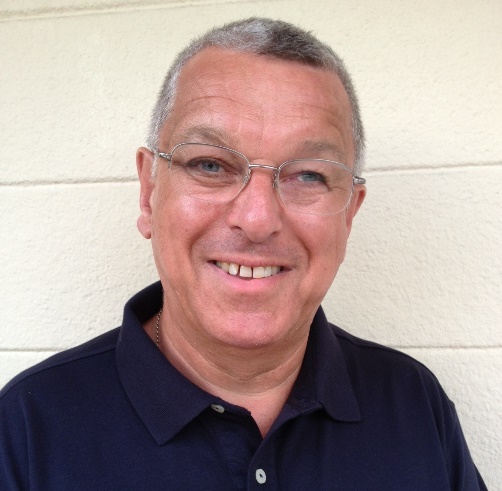
26 October 2021
Professor Graham Smith Takes Up Role as President of The Society of Sports Therapists
After 31 years of illustrious service as Chair of The Society of Sports Therapists, Professor Graham N Smith, has moved to the role of President. He is the first in the Society’s history to hold this honour.
Professor Smith has been instrumental in the development of the Society and has led from the front with fortitude, professionalism and the utmost dedication.
His vision for the Society has seen it grow from its first collaborative agreement in 1996 with the University of North London (now London Metropolitan University) to its current family of 32 higher education institutions and 38 academic programmes.
From the Society’s formative days back in 1990 and the development of the Sports Therapy Diploma (which was created for those working in professional football who had vast experience but no recognized qualifications), standards of education and training in Sports Therapy have risen exponentially. Membership of the Society is now at graduate level and Members hold qualifications ranging from degree status through to Professorships and are producing high quality research that is being recognised across the world.
Throughout his tenure as Chair of the Society, Professor Smith has fought long and hard for recognition of Sports Therapists. Seeking Statutory Regulation has undoubtedly provided one of the Society’s biggest challenges. Despite the Health and Care Professions Council recognising the need for Sports Therapists to be regulated on 3 separate occasions, the battle for regulation continues and regulation is still an existing strategy for the Board.
Undeterred, Professor Smith has been unfailing in his desire for Society Members to be recognised for their skills, knowledge and abilities. His standing in the world of Sport and Exercise Medicine, his strong governance and leadership of the Society, and his continued commitment to the advancement of Sports Therapy has opened many doors, started thousands of conversations and developed lasting friendships both home and abroad; all of which have created newfound opportunities for the Society and its Members. The latter are now working in many different arenas, including sport at all levels, independent musculoskeletal settings, education, the NHS and with private providers delivering NHS services.
It’s been an inspirational journey so far and the Society thanks Professor Smith for all that he has achieved as Chair of the organisation to date and looks forward to continuing to work with him in his new role as President.
Dr Kevin Campbell-Karn, Associate Professor at Buckinghamshire New University takes up the reins as Acting Chair and three new directors join the Board; Dr Lynsey Northeast, Kristian Weaver and Michael Cole. New roles will be confirmed at the forthcoming Board Meeting in November.
Dr Campbell-Karn said:
“Having known Graham for the past 22 years it seems strange to think he is no longer Chair. However, I am extremely excited by the new Board members and the skills, insights, and dedication they bring. All Directors agreed that we wanted to honour Graham’s efforts over the past 31 years in taking the Society to where it is now. We hope that in his new role as President he will be well placed to offer guidance from his vast experience, as we trace our path ever forwards.”
Continue reading